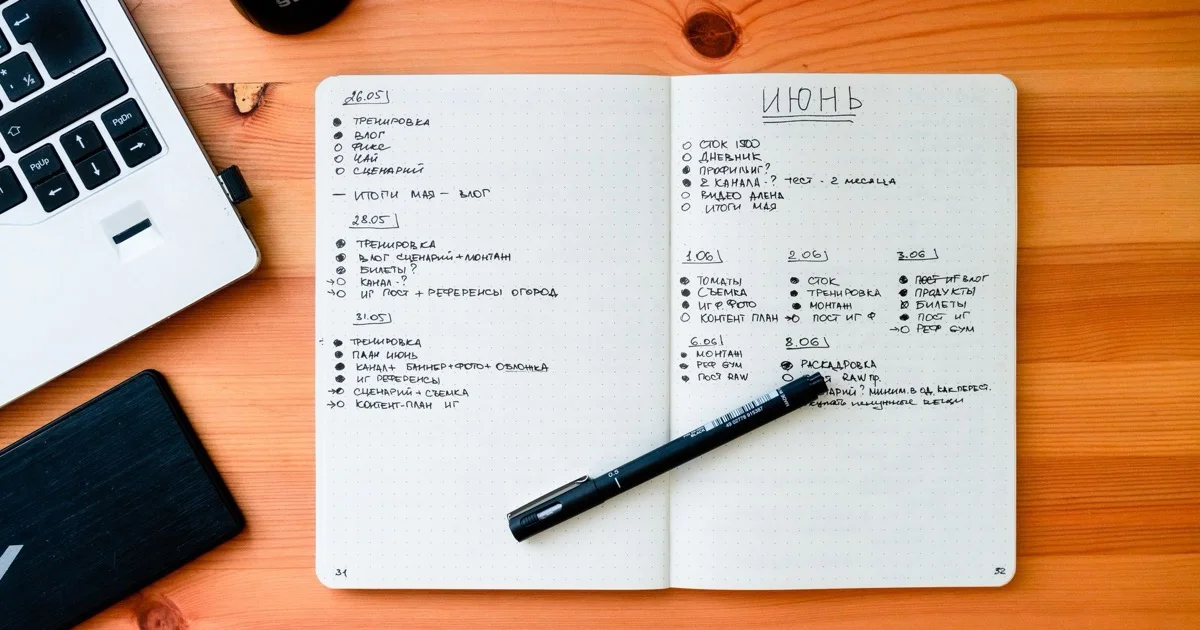
A checkbox holds exactly one bit of information. You did the thing, or you didn’t. That is the entire payload.
For a few habits that is plenty. For most of the ones people stay interested in past the first month, it throws away the part that mattered. If you have gone looking for a habit tracker that tracks numbers instead of ticks, it is usually because you noticed your app congratulating you for a five-minute walk in exactly the tone it used for the two-hour hike, and you started to quietly distrust the grid.
What the Checkbox Throws Away
Take the walk. Tuesday you went around the block in the rain because you felt obligated, and it took six minutes. Saturday you did eleven kilometers along a river and came home properly tired. Both days are green. Your tracker will report, correctly and uselessly, that you walked five days out of seven, same as the week before.
The error is treating “did it happen” as the measurement, when for most activities it is only the precondition. Reading has a quantity attached to it, and so do running, sleep, water, practice and writing. What a binary log hands you is attendance, and attendance is the least interesting fact about anything you have been doing for six months.
There is a quieter problem underneath. A checkbox rewards the smallest possible version of an activity exactly as generously as the largest, because the tick is what the app is scoring and the tick costs six minutes. Give people a system that pays out identically for six minutes and two hours, and over a long enough stretch a lot of them drift toward six minutes. That is not weakness so much as reading the incentive correctly.
Six Months of Checkmarks Against Six Months of Numbers
Open a tracker you have used for half a year and ask it something you actually care about.
With checkmarks, the only answerable question is how often. You read on 104 days. You ran 61 times. Fine. Now ask whether your reading is going anywhere, and the history has nothing to say, because every one of those 104 days looks identical to every other. The grid is dense and green and completely mute.
With numbers, the same six months answers a different class of question. You averaged nineteen pages a sitting in January and eleven in April, which lines up with the month you started reading in bed instead of at the table. Your runs held at five kilometers until August, when they crept up to seven without you deciding anything. That is a record with a shape. You can disagree with it, which is more than you can do with a row of ticks. You can also set it against something else, which is where the patterns hiding in a year of entries start to surface, and that comparison needs a quantity on both sides to say anything.
This is the part worth taking seriously, because habits rarely die by stopping. They drain. Attendance holds while the quantity quietly bleeds out, and you keep collecting green squares for months while the activity shrinks to a formality. A binary tracker cannot see that happening. It will tell you everything is fine right up until you work it out on your own.
Choosing the One Number a Habit Tracker Should Hold
The obvious failure mode, once you can record quantities, is recording all of them. Distance and duration and elevation and heart rate and perceived effort and a mood rating out of ten. Six fields is a tax charged at the exact moment you are most likely to skip logging altogether, which is while you are sweaty and standing in a doorway.
One metric per activity. Pick the one you would want to know a year from now.
A useful filter is that the number should already be in your head when you sit down to log, without a second device and without arithmetic. Minutes for meditation, because you know roughly how long you sat. Pages for reading, because the bookmark moved. Kilometers for a run only if something already told you the distance. If getting the number means opening another app to look it up, you will do it for eleven days.
Skip derived metrics. Pace, efficiency, a weekly compliance percentage: all of it is arithmetic you can do later, from the raw number, on the rare occasion you want it. Be careful with ratings out of ten, too. They feel like data and they drift, because your private definition of a seven in March is not your definition of a seven in September.
Counting refills of a bottle whose size you know is a good model for how coarse the number is allowed to be. Three bottles is a worse measurement than a true daily total in milliliters, and a far better one than the total you were never going to record.
Whatever you pick, keep a note field beside it. The number says what happened and two words of context say why, and in a year the note is often the part you are grateful for. “Short, knee” explains an outlier that the metric alone makes look like a lapse of character.
When a Checkbox Is Genuinely the Right Tool
Some things really are binary, and forcing a metric onto them is friction with extra steps. Took the medication, flossed, called your mother. Nobody needs a duration on flossing, and an activity with no meaningful range gives a number nothing to describe.
Even then you are not stuck with a bare grid, because the count is a number too. Eighteen flossed days in September against nine in August is a real measurement, and it arrives free from the act of logging without you deciding on a metric at all. That is the quiet advantage of a log over a checklist: the checklist shows you this week, while the log can total a month and set it beside the month before. Which is roughly what you wanted from the streak, minus the part where one bad Tuesday wipes the slate.
The subtler case is timing. While you are still installing something, the only question worth asking is whether you showed up, and a quantity can get in the way. A beginner who logs four minutes of meditation next to yesterday’s twelve has just been handed a reason to feel bad about a session that was, by every sane standard, a success. Start binary. Add the number a couple of months in, once showing up is no longer in doubt and how much has become the interesting part. Nothing stops you changing what you record halfway through, though the apps built around streaks you define yourself tend to make that switch harder than it should be, because the streak is the product and the number is an afterthought.
Where the Numbers Live
This is usually where people give up on apps and open a spreadsheet, which is a fair response to a category of software that mostly sells checkmarks. Columns hold numbers. Sheets do math. The catch arrives in month three, when logging means picking up your phone, finding the file, pinching to the right row and typing into a cell, and the friction wins. That trade, rows and formulas against something built for the thirty seconds after an activity ends, is worth thinking through before you commit either way.
Logly was built for the other side of it. Every entry can carry a metric, so an activity records a duration, a distance, a count, a volume or a weight depending on what suits it, and every entry has room for a comment. The library ships with more than 600 activities, and the stats run on the numbers rather than on a chain: how many times this month, what the average was, and whether that average moved against the month before. A streak gets counted on your profile, but nothing is built to protect it, which is deliberate: once you are defending a number you have stopped measuring anything and started keeping score. That decision has a longer argument behind it about staying consistent without a chain to defend.
The free tier covers the logging, the activity library, the unified timeline, and Apple Health and Google Health Connect sync. Logly Pro is $24.99 a year, with no monthly plan, and adds custom activities, AI insights and chat, voice logging, location and the deeper stats.
Log the number, not just the checkmark. Logly is free, and no subscription is required.
Ready to start tracking?
Logly makes it easy to build lasting habits and see your progress over time. It's free to download.


Frequently asked questions
What is a habit tracker that tracks numbers?
It is a tracker where each entry carries a quantity rather than only a tick: minutes of meditation, pages read, kilometers run, glasses of water, reps. The checkbox records that the activity happened. The number records how much of it happened, which is what you need when the question is whether something is growing, shrinking, or holding steady.
Why isn't a checkbox habit tracker enough?
Because a six-minute walk and a two-hour hike produce the same green square. That is fine for a few weeks, when showing up is the only thing in question. It stops being fine once the habit is established, because habits usually fade by shrinking rather than by stopping, and a binary log cannot see the shrinking. Attendance stays high while the activity quietly turns into a formality.
How many metrics should you track per habit?
One. Pick the number you would want to know a year from now, and make sure it is already in your head when you sit down to log, without a second device or any arithmetic. Every extra field is a tax charged at the exact moment you are most likely to skip logging altogether. Skip derived figures like pace or a weekly compliance percentage, since you can calculate those later from the raw number on the rare occasion you want them.
Does Logly let every activity record a number?
Yes. An entry can carry a duration, a distance, a count, a volume or a weight, whichever suits the activity, plus a comment. The free tier includes the logging, a library of more than 600 activities, the unified timeline, and Apple Health and Google Health Connect sync. Stats are computed on the numbers rather than on a streak: how many times this month, what the average was, and how that compares with the month before.